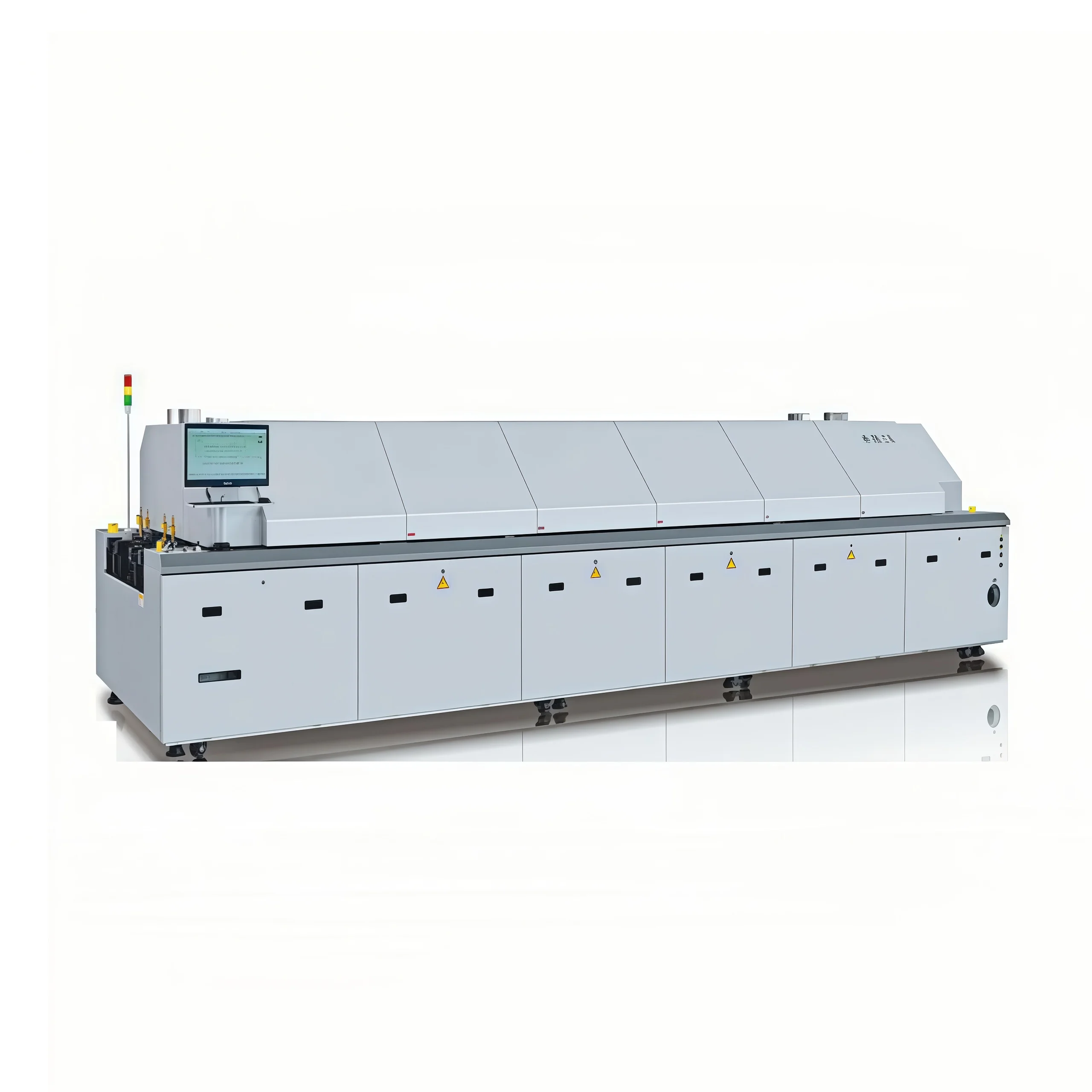
SMT vacuum reflow soldering
This device is completely independently developed, combining the strengths of many experts and carefully crafted, with independent intellectual property rights for vacuum reflow soldering. The product is designed for vacuum SMT soldering of automotive headlights, aerospace, aviation, medical, automotive, BGA, FPC, LED and other fields.
This device adopts an industrial control embedded control system, which uses dual CPU computing and can run independently without a computer. It is not only stable and reliable, but also has more accurate temperature control
The same specifications and models are the most common, supporting dual track dual speed, dual track single chamber, dual track dual chamber, dual track multi-purpose dual track dual chamber, and dual track single chamber. The synchronous horizontal lifting of the upper furnace cover is convenient for maintenance and upkeep. The equipment supports the formula function of key welding parameters, supports MES remote data reading and step-by-step vacuum design, and can be vacuumed in up to 5 steps. The patented sealing ring water cooling structure not only has a longer service life and lower operating costs, but also reduces expensive product damage caused by poor sealing. The maximum vacuum degree can reach 0.1KPa, Void Single<1%, Total<2%. The fastest cycle time is 30s/per cycle, and the vacuum reflow soldering industry has the highest efficiency. The heat engine time is about 30min
1、 Equipment structural characteristics description: The equipment is specifically divided into: transmission part, heating and welding area, vacuum unit, cooling area, and rosin recovery system.
1. The transmission part of this structure runs through the entire equipment and is divided into three sections: heating zone, vacuum unit, and cooling section. The transportation speed of each section is independently adjusted, and the width is adjusted as a whole, playing the role of equidistant step pushing plate transportation.
2. The temperature of each temperature zone in the heating and welding area can be adjusted separately to ensure a flexible and stable welding process, meeting the requirements of lead-free welding processes. The product achieves welding processes that meet customer requirements during this process.
3. The vacuum unit PCB enters the vacuum unit directly from the soldering area. At this time, the solder joints of the PCB board are in a molten state. The vacuum process is started to reduce the vacuum pressure to 100mbar-5mbar. Internal gases such as pores and voids overflow from the molten solder joints, which can reduce the void rate to below 1%.
4. The cooling zone PCB enters the cooling zone directly from the vacuum unit, similar to the standard reflow soldering cooling function, meeting a certain cooling slope and reducing the board temperature before entering the next process. At this point, the soldering process is completed.
5. The rosin recycling system has the same function as standard reflow soldering, which recovers rosin into specific structures through cooling and regular maintenance to reduce equipment maintenance and environmental pollution.