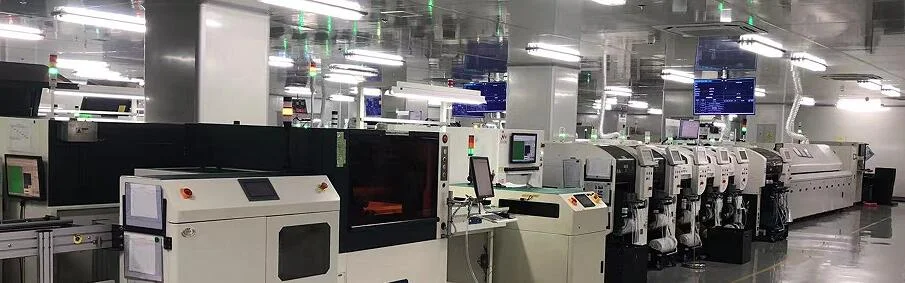
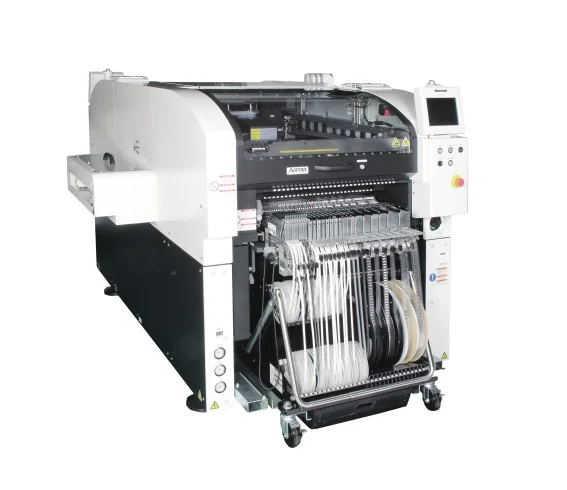
In the SMT industry, the Panasonic NPM-W2 has become a popular choice for multi-variety, large-board production scenarios due to its wide substrate handling capabilities, dual-track independent operation design, and broad compatibility with components ranging from 03015 micro-components to 120×90mm large components. However, the million-dollar investment required for new equipment has led many companies to turn to the second-hand market. Used NPM-W2s may be about half the price of new ones, but without experience, it's easy to buy refurbished, faulty, or incompatible models, resulting in a net loss. This article systematically outlines the key pitfalls and operational points to avoid when purchasing a used NPM-W2 from a practical perspective.
I. Prioritize Your Needs: Do You Really Need a W2?
The first pitfall many people fall into is failing to understand their product's specific equipment requirements and being led astray by suppliers. Different models in the NPM series have different focuses; choosing the wrong model is a fundamental mistake.
The core advantages of the NPM-W2 are: large substrate size (maximum 750×550mm per rail), multiple feeder stations (accommodating up to approximately 120 8mm feeders), and the ability for independent/alternating/mixed operation of dual rails. This means that if your products mainly consist of small, high-precision boards for mobile phones and consumer electronics, the NPM-D3/D3A high-speed module unit might be more suitable; while home appliance control boards, industrial control boards, LED lighting, server boards, and large automotive electronics boards are the W2's primary applications.
Before signing any contract, it is recommended to clarify three questions:
- Does the maximum PCB size exceed 500mm?
- Does the production mode require frequent line changes and high-variety, low-batch production?
- Does the component range include large connectors or irregularly shaped components?
If the answer to most of the above is "yes," then the W2 is worth considering. Otherwise, the model compatibility should be reassessed to avoid paying for features that are not needed.
II. Five-Step Inspection Method: Exposing Refurbished Machines to Their True Nature
Choosing the right model is only the first step; the true condition of the equipment itself is the key to avoiding pitfalls. Below are five essential steps to perform during machine inspection.
Step 1: Check Identity and History (Preventing Refurbishment)
Verify that the machine's nameplate, serial number, and system display information match. This is the basic operation to prevent tampering. Pay special attention to:
- Year of manufacture and cumulative operating time: Ideally, the cumulative operating time of NPM series machines should not exceed 8,000 hours. Exceeding this value indicates a significantly increased risk of wear and tear on core components.
- Maintenance and repair records: Machines that refuse to provide complete records are likely problematic.
- Exterior details: Observe whether there are signs of repainting on the screws and whether there is excess paint at the seams. These are important clues to determine whether the machine has been refurbished.
Step 2: Core Hardware Inspection
| Inspection Items | Key Points | Risk Signals |
| Placement Head/Nose | Stable vacuum pressure, no air leakage; no wear or blockage in the nozzle; smooth return to home without jamming | Abnormal noises, alarms, vacuum fluctuations |
| Servo and Drive | Good lubrication of guide rails and lead screws, no obvious wear or scratches | Abnormal operating noises, positioning deviation |
| Vision System | Clear camera light source without scratches, stable component recognition | Blurry image, frequent false alarms |
| Feeder | Smooth feeding, neat roll, unobstructed airflow | Misalignment, tape jamming, uneven rolls |
Step 3: Performance Testing (This is mandatory and cannot be omitted)
Even the newest machine needs to be tested to determine its true capabilities. It is recommended to conduct at least 2-4 hours of continuous placement testing using mainstream PCBs and components from your own factory. Key Observations:
- Placement Accuracy: 0201 components should be within ±0.05mm, and ICs should be within ±0.03mm.
- Component rejection rate: Normally controlled below 0.3%.
- Continuous Operation Stability: Check for any abnormal alarms or shutdowns.
Experienced buyers may even request CPK testing to ensure the equipment's positioning repeatability (CPK) is ≥1.33, a key indicator of the equipment's process capability.
Step 4: Electrical and Software System Inspection
Confirm that the servo drivers and boards have no alarm records or signs of repair. The system software should be original, version-matched, and parameters unaltered. Also check all communication interfaces, I/O signals, and pneumatic connections for proper functioning.
Step 5: Assess Remaining Lifespan and Maintenance Costs
The true cost of used equipment lies not only in the initial price but also in subsequent maintenance. Recommended information to understand:
- Estimated remaining lifespan of core components (placement head, servo motor, camera)
- Market prices and procurement channels for commonly used consumable parts (nozzles, filters, belts, feeders)
- Rough estimate of annual maintenance costs (industry experience suggests approximately 5%–8% of the equipment price)
An easily overlooked detail: A single original feeder costs several thousand yuan, and annual replacement costs for consumables can reach tens of thousands of yuan. This cost must be calculated before purchasing.
III. Channel Selection: What's the difference between large companies and small workshops?
The used pick-and-place machine market is chaotic; the choice of supplier directly affects equipment quality and after-sales support. The following characteristics should be given priority consideration:
Profile of a reliable supplier:
- Focuses on used SMT equipment as its main business
- Has at least two professional engineers with no less than 3 years of industry experience
- Possesses complete capabilities in equipment refurbishment, calibration, and debugging, rather than simply "buying and selling"
- Can provide case studies of past clients in the same industry for reference
- Has a physical warehouse and inventory, supporting on-site inspection and verification
Warning signs:
- Prices more than 30% lower than market price – likely overhauled or refurbished machines
- Cannot provide equipment history records and inspection reports
- Can ship within one week – legitimate refurbishment usually requires about three weeks for calibration, debugging, and aging
- Refuses on-site testing or requires payment before inspection
The origin of the equipment is also worth noting: Overseas used equipment typically operates on an 8-hour workday and undergoes strict regular maintenance, resulting in shorter operating times and relatively better condition; while domestic equipment often operates under high loads, potentially leading to higher wear and tear. Of course, domestically produced equipment that has undergone professional refurbishment and calibration can also achieve excellent performance; the key lies in the supplier's technical capabilities.
IV. Contract Terms: What's Written in Paper is the Guarantee
Many procurement disputes stem from discrepancies between verbal promises and actual delivery. The contract is the most important safety net; the following clauses must be clearly written down:
Basic Equipment Information List:
- Specific model, serial number, year of manufacture, cumulative operating hours
- Configuration list (including head type, feeder quantity and specifications, software version, etc.)
Acceptance Criteria:
- Placement accuracy indicators (clearly defined values)
- Maximum rejection rate
- Production capacity indicators
- Acceptance method (actual placement test duration, judgment criteria)
Warranty Terms:
- Warranty period: Industry standard is 3-6 months; for high-end models like NPM, 6 months or more can be negotiated.
- Warranty coverage: Clearly define which components are covered and which are considered consumables (nipples, belts, etc. are usually not covered).
- Response time: How long after a fault is reported will a response be provided.
Summary
Purchasing a used NPM-W2 is essentially about finding a balance between performance, price, and risk. Here's a set of workable principles:
1. Determine the model first, then find the equipment—the W2 is designed for large-format boards and diverse product scenarios; first, confirm its compatibility with your products.
2. Verification must involve actual testing—the appearance can be refurbished, but actual surface mount technology (SMT) data doesn't lie.
3. Choose suppliers based on capability, not size—the core is whether they have a technical team and after-sales service capabilities, not just warehouse size.
4. Contract terms equal post-purchase remedies—all verbal promises deserve to be put in writing.
Used NPM-W2s aren't necessarily bad purchases; the key is knowing how to choose. Following the above process will at least avoid 80% of the pitfalls in the market. If possible, hiring a third-party SMT equipment evaluation expert to assist with verification is an effective way to further reduce procurement risks.